In recent years, frequency modifications and transponder reassignments have become increasingly frequent due to the rise of high-definition channels, improved modulation techniques, and broader coverage beams. These changes often occur without prior notice, leaving viewers confused when channels suddenly disappear. Staying informed about these shifts ensures that users can retune their receivers quickly and avoid long periods of missing content.
Modern receivers rely on a delicate combination of parameters—such as symbol rate, polarization, and forward error correction—to decode satellite signals efficiently. Even a minor entry error in these values can result in weak reception, frozen images, or a complete loss of service. This emphasizes the importance of referencing updated data whenever satellites adjust their transponders or expand their broadcasting capabilities.
Beyond technical parameters, the physical setup of a satellite system plays a vital role in determining signal strength and stability. A well-aligned dish, supported by high-quality cables and connectors, can significantly enhance reception, even in regions with challenging weather conditions. Small alignment errors, often unnoticed by users, can accumulate over time and degrade signal performance until channels become difficult to lock.
Environmental conditions such as heavy rain, dust storms, or dense cloud cover can also impact satellite reception. Understanding how these natural elements affect signal behavior allows users to troubleshoot more effectively and avoid unnecessary adjustments to their equipment. Awareness of these influences provides a strong foundation for maintaining optimal performance throughout the year.
As satellite broadcasting continues to shift toward higher resolutions and wider transponder bandwidths, users must adapt to more demanding signal requirements. This evolution requires ongoing awareness of updates that influence channel availability, modulation formats, and regional coverage patterns. Keeping track of these developments empowers viewers to remain fully connected to the content they rely on daily.
In a world where communication is constantly evolving, access to accurate, real-time satellite information has become more important than ever. By staying informed about frequency updates, technological advancements, and environmental influences, viewers can ensure uninterrupted access to their favorite channels while achieving the highest possible quality in both audio and video performance.
Frequency shifts and transponder changes occur regularly, often affecting channel stability and reception quality. Staying informed On the subject of these updates ensures uninterrupted access to preferred broadcasts.
Modern receivers depend on precise technical parameters such as symbol rate, polarization, and modulation to deliver clear and consistent signals. Any incorrect input can result in pixelation or complete signal loss.
As satellite technology evolves, new standards like HD and 4K require more stable frequencies and stronger beams, making proper tuning more essential than ever.
Dish alignment also plays a significant role in overall signal performance. Even slight adjustments can dramatically improve clarity, strength, and channel availability.
Environmental factors including weather, terrain, and cable quality can influence reception as well. Understanding these elements helps users troubleshoot and optimize their setups with confidence.
Reliable satellite information provides viewers with the tools they need to navigate a fast-changing broadcasting environment more effectively.
With access to updated parameters and technical insights, users can enhance their viewing experience and reduce common reception difficulties.
In a landscape defined by constant innovation, staying informed ensures that every viewer remains connected to the channels and content they enjoy most.
Frequency shifts and transponder changes occur regularly, often affecting channel stability and reception quality. Staying informed On the subject of these updates ensures uninterrupted access to preferred broadcasts.
Modern receivers depend on precise technical parameters such as symbol rate, polarization, and modulation to deliver clear and consistent signals. Any incorrect input can result in pixelation or complete signal loss.
As satellite technology evolves, new standards like HD and 4K require more stable frequencies and stronger beams, making proper tuning more essential than ever.
Dish alignment also plays a significant role in overall signal performance. Even slight adjustments can dramatically improve clarity, strength, and channel availability.
Environmental factors including weather, terrain, and cable quality can influence reception as well. Understanding these elements helps users troubleshoot and optimize their setups with confidence.
Reliable satellite information provides viewers with the tools they need to navigate a fast-changing broadcasting environment more effectively.
With access to updated parameters and technical insights, users can enhance their viewing experience and reduce common reception difficulties.
In a landscape defined by constant innovation, staying informed ensures that every viewer remains connected to the channels and content they enjoy most.
Frequency shifts and transponder changes occur regularly, often affecting channel stability and reception quality. Staying informed On the subject of these updates ensures uninterrupted access to preferred broadcasts.
Modern receivers depend on precise technical parameters such as symbol rate, polarization, and modulation to deliver clear and consistent signals. Any incorrect input can result in pixelation or complete signal loss.
As satellite technology evolves, new standards like HD and 4K require more stable frequencies and stronger beams, making proper tuning more essential than ever.
Dish alignment also plays a significant role in overall signal performance. Even slight adjustments can dramatically improve clarity, strength, and channel availability.
Environmental factors including weather, terrain, and cable quality can influence reception as well. Understanding these elements helps users troubleshoot and optimize their setups with confidence.
Reliable satellite information provides viewers with the tools they need to navigate a fast-changing broadcasting environment more effectively.
With access to updated parameters and technical insights, users can enhance their viewing experience and reduce common reception difficulties.
In a landscape defined by constant innovation, staying informed ensures that every viewer remains connected to the channels and content they enjoy most.
With frequency updates happening more frequently than ever, even a small change in transponder settings can cause channels to disappear from your receiver. Having verified parameters makes the tuning process smoother and far more reliable.
Modern receivers now support advanced formats like HD, Full HD, and 4K, each requiring precise symbol rates, polarizations, and modulation details. Without accurate data, viewers may struggle to achieve the clarity these technologies promise.
Dish alignment remains one of the most important factors in signal performance. Even slight movements caused by weather or installation issues can affect the strength and stability of the broadcast.
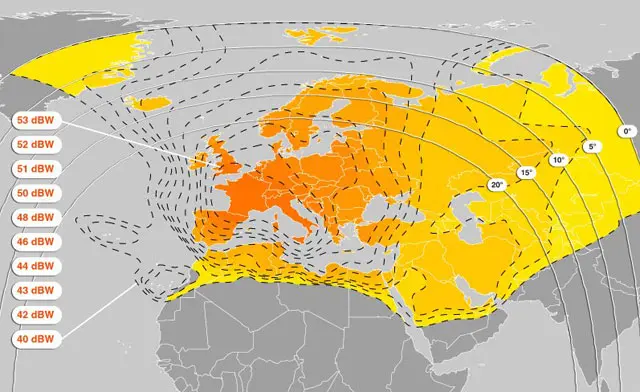
Understanding satellite footprints helps users determine whether a specific beam is accessible from their region. This knowledge reduces trial-and-error when selecting satellites or adjusting dish positions.
Technical challenges such as weak signals, atmospheric interference, or outdated equipment can disrupt viewing. Proper guidance ensures that such issues can be diagnosed and resolved quickly.
Keeping your satellite system updated prevents channel loss and ensures continuous access to news, sports, entertainment, and educational content. Regular maintenance is a small effort with major benefits.
Signal Track provides viewers with accurate frequency information, clear tuning instructions, and essential insights to navigate the fast-changing world of satellite broadcasting.
As new channels launch and others shift positions, a trusted source of information becomes invaluable. Reliable updates help users stay ahead of changes rather than react to disruptions.
For technicians and hobbyists, detailed transponder data offers a deeper understanding of signal behavior, modulation systems, and broadcast patterns across different satellites.
With the rise of multi-satellite installations and motorized dishes, users now have access to a wider range of content than ever before. Efficient setup ensures optimal use of such advanced configurations.
Signal troubleshooting often requires a combination of good equipment, precise alignment, and accurate technical parameters. When all three align, reception becomes seamless and stable.
Information On the subject of symbol rate, FEC, and modulation type allows users to manually input settings and recover channels that automatic scans might miss.
The global shift toward digital broadcasting makes accuracy more important than ever. Correct data enhances both picture quality and overall system performance.
Staying informed empowers viewers to enjoy a smooth and uninterrupted watching experience, no matter how rapidly the satellite landscape evolves.
Frequency shifts and transponder changes occur regularly, often affecting channel stability and reception quality. Staying informed On the subject of these updates ensures uninterrupted access to preferred broadcasts.
Modern receivers depend on precise technical parameters such as symbol rate, polarization, and modulation to deliver clear and consistent signals. Any incorrect input can result in pixelation or complete signal loss.
As satellite technology evolves, new standards like HD and 4K require more stable frequencies and stronger beams, making proper tuning more essential than ever.
Dish alignment also plays a significant role in overall signal performance. Even slight adjustments can dramatically improve clarity, strength, and channel availability.
Environmental factors including weather, terrain, and cable quality can influence reception as well. Understanding these elements helps users troubleshoot and optimize their setups with confidence.
Reliable satellite information provides viewers with the tools they need to navigate a fast-changing broadcasting environment more effectively.
With access to updated parameters and technical insights, users can enhance their viewing experience and reduce common reception difficulties.
In a landscape defined by constant innovation, staying informed ensures that every viewer remains connected to the channels and content they enjoy most.
In recent years, frequency modifications and transponder reassignments have become increasingly frequent due to the rise of high-definition channels, improved modulation techniques, and broader coverage beams. These changes often occur without prior notice, leaving viewers confused when channels suddenly disappear. Staying informed On the subject of these shifts ensures that users can retune their receivers quickly and avoid long periods of missing content.
Modern receivers rely on a delicate combination of parameters—such as symbol rate, polarization, and forward error correction—to decode satellite signals efficiently. Even a minor entry error in these values can result in weak reception, frozen images, or a complete loss of service. This emphasizes the importance of referencing updated data whenever satellites adjust their transponders or expand their broadcasting capabilities.
Beyond technical parameters, the physical setup of a satellite system plays a vital role in determining signal strength and stability. A well-aligned dish, supported by high-quality cables and connectors, can significantly enhance reception, even in regions with challenging weather conditions. Small alignment errors, often unnoticed by users, can accumulate over time and degrade signal performance until channels become difficult to lock.
Environmental conditions such as heavy rain, dust storms, or dense cloud cover can also impact satellite reception. Understanding how these natural elements affect signal behavior allows users to troubleshoot more effectively and avoid unnecessary adjustments to their equipment. Awareness of these influences provides a strong foundation for maintaining optimal performance throughout the year.
As satellite broadcasting continues to shift toward higher resolutions and wider transponder bandwidths, users must adapt to more demanding signal requirements. This evolution requires ongoing awareness of updates that influence channel availability, modulation formats, and regional coverage patterns. Keeping track of these developments empowers viewers to remain fully connected to the content they rely on daily.
In a world where communication is constantly evolving, access to accurate, real-time satellite information has become more important than ever. By staying informed On the subject of frequency updates, technological advancements, and environmental influences, viewers can ensure uninterrupted access to their favorite channels while achieving the highest possible quality in both audio and video performance.
With frequent updates applied to satellite transponders, channels often adjust their frequencies to improve signal strength, adopt new broadcasting standards, or expand their reach. These changes can cause confusion for viewers who suddenly lose access to their favorite channels. Keeping track of these modifications is essential to ensure smooth reception and prevent unnecessary signal issues.
Modern satellite receivers depend on a precise combination of technical parameters. Frequency values, symbol rates, polarizations, and error-correction settings must all work in harmony for a channel to load correctly. Even a slight misconfiguration can lead to weak signals, pixelation, or complete loss of service. This highlights the importance of accurate tuning and reliable data.
The physical components of a satellite system also play a significant role in the viewer’s overall experience. A dish that is misaligned by just a few millimeters can cause significant drops in signal quality. High-quality cabling, secure connectors, and a stable mounting position further enhance performance, ensuring that channels remain clear and uninterrupted throughout the day.
Environmental conditions influence satellite signals more than most viewers realize. Heavy rain, strong winds, or thick cloud cover can temporarily reduce signal strength, especially when broadcasting at higher frequencies. Understanding how weather interacts with satellite transmission can help users troubleshoot more effectively and avoid unnecessary adjustments.
As broadcasting technology evolves, channels continue to shift toward more advanced formats such as HD, Full HD, and 4K. These formats require stronger, cleaner signals, making accurate frequency updates even more crucial. Viewers who stay informed are better prepared to adapt their receivers and maintain optimal picture quality during these transitions.
In an age where digital communication moves rapidly, staying updated with the latest satellite changes ensures uninterrupted access to news, entertainment, sports, and global content. By understanding both the technical and environmental factors that shape satellite performance, viewers can enjoy a stable, reliable broadcasting experience at all times.
With frequent updates applied to satellite transponders, channels often adjust their frequencies to improve signal strength, adopt new broadcasting standards, or expand their reach. These changes can cause confusion for viewers who suddenly lose access to their favorite channels. Keeping track of these modifications is essential to ensure smooth reception and prevent unnecessary signal issues.
Modern satellite receivers depend on a precise combination of technical parameters. Frequency values, symbol rates, polarizations, and error-correction settings must all work in harmony for a channel to load correctly. Even a slight misconfiguration can lead to weak signals, pixelation, or complete loss of service. This highlights the importance of accurate tuning and reliable data.
The physical components of a satellite system also play a significant role in the viewer’s overall experience. A dish that is misaligned by just a few millimeters can cause significant drops in signal quality. High-quality cabling, secure connectors, and a stable mounting position further enhance performance, ensuring that channels remain clear and uninterrupted throughout the day.
Environmental conditions influence satellite signals more than most viewers realize. Heavy rain, strong winds, or thick cloud cover can temporarily reduce signal strength, especially when broadcasting at higher frequencies. Understanding how weather interacts with satellite transmission can help users troubleshoot more effectively and avoid unnecessary adjustments.
As broadcasting technology evolves, channels continue to shift toward more advanced formats such as HD, Full HD, and 4K. These formats require stronger, cleaner signals, making accurate frequency updates even more crucial. Viewers who stay informed are better prepared to adapt their receivers and maintain optimal picture quality during these transitions.
In an age where digital communication moves rapidly, staying updated with the latest satellite changes ensures uninterrupted access to news, entertainment, sports, and global content. By understanding both the technical and environmental factors that shape satellite performance, viewers can enjoy a stable, reliable broadcasting experience at all times.
In recent years, frequency modifications and transponder reassignments have become increasingly frequent due to the rise of high-definition channels, improved modulation techniques, and broader coverage beams. These changes often occur without prior notice, leaving viewers confused when channels suddenly disappear. Staying informed On the subject of these shifts ensures that users can retune their receivers quickly and avoid long periods of missing content.
Modern receivers rely on a delicate combination of parameters—such as symbol rate, polarization, and forward error correction—to decode satellite signals efficiently. Even a minor entry error in these values can result in weak reception, frozen images, or a complete loss of service. This emphasizes the importance of referencing updated data whenever satellites adjust their transponders or expand their broadcasting capabilities.
Beyond technical parameters, the physical setup of a satellite system plays a vital role in determining signal strength and stability. A well-aligned dish, supported by high-quality cables and connectors, can significantly enhance reception, even in regions with challenging weather conditions. Small alignment errors, often unnoticed by users, can accumulate over time and degrade signal performance until channels become difficult to lock.
Environmental conditions such as heavy rain, dust storms, or dense cloud cover can also impact satellite reception. Understanding how these natural elements affect signal behavior allows users to troubleshoot more effectively and avoid unnecessary adjustments to their equipment. Awareness of these influences provides a strong foundation for maintaining optimal performance throughout the year.
As satellite broadcasting continues to shift toward higher resolutions and wider transponder bandwidths, users must adapt to more demanding signal requirements. This evolution requires ongoing awareness of updates that influence channel availability, modulation formats, and regional coverage patterns. Keeping track of these developments empowers viewers to remain fully connected to the content they rely on daily.
In a world where communication is constantly evolving, access to accurate, real-time satellite information has become more important than ever. By staying informed On the subject of frequency updates, technological advancements, and environmental influences, viewers can ensure uninterrupted access to their favorite channels while achieving the highest possible quality in both audio and video performance.
With frequent updates applied to satellite transponders, channels often adjust their frequencies to improve signal strength, adopt new broadcasting standards, or expand their reach. These changes can cause confusion for viewers who suddenly lose access to their favorite channels. Keeping track of these modifications is essential to ensure smooth reception and prevent unnecessary signal issues.
Modern satellite receivers depend on a precise combination of technical parameters. Frequency values, symbol rates, polarizations, and error-correction settings must all work in harmony for a channel to load correctly. Even a slight misconfiguration can lead to weak signals, pixelation, or complete loss of service. This highlights the importance of accurate tuning and reliable data.
The physical components of a satellite system also play a significant role in the viewer’s overall experience. A dish that is misaligned by just a few millimeters can cause significant drops in signal quality. High-quality cabling, secure connectors, and a stable mounting position further enhance performance, ensuring that channels remain clear and uninterrupted throughout the day.
Environmental conditions influence satellite signals more than most viewers realize. Heavy rain, strong winds, or thick cloud cover can temporarily reduce signal strength, especially when broadcasting at higher frequencies. Understanding how weather interacts with satellite transmission can help users troubleshoot more effectively and avoid unnecessary adjustments.
As broadcasting technology evolves, channels continue to shift toward more advanced formats such as HD, Full HD, and 4K. These formats require stronger, cleaner signals, making accurate frequency updates even more crucial. Viewers who stay informed are better prepared to adapt their receivers and maintain optimal picture quality during these transitions.
In an age where digital communication moves rapidly, staying updated with the latest satellite changes ensures uninterrupted access to news, entertainment, sports, and global content. By understanding both the technical and environmental factors that shape satellite performance, viewers can enjoy a stable, reliable broadcasting experience at all times.
The Thor satellite system, operated by Space Norway (formerly Telenor Satellite Broadcasting), is a cornerstone of satellite communications, delivering high-quality broadcasting and broadband services across Europe, the Middle East, and North Africa (MENA).
Positioned at the prime orbital slot of 1° West, the Thor fleet—comprising Thor 5, Thor 6, Thor 7, and the upcoming Thor 8—supports direct-to-home (DTH) television, maritime connectivity, and data services for millions of users.
Known for its reliability and advanced technology, the Thor system serves broadcasters, maritime operators, and government clients, distributing over 1,000 TV channels and radio stations to more than 18 million homes.
This guide explores the Thor satellite system’s capabilities, its role in global connectivity, the latest frequency details for tuning, and practical tips for optimal reception as of June 2025.
Why Choose the Thor Satellite System?
-
Extensive Coverage: Provides robust Ku-band and Ka-band coverage across the Nordics, Central and Eastern Europe, the Middle East, and maritime regions like the North Sea, Red Sea, and Mediterranean.
-
High-Quality Broadcasting: Delivers HD and SD television channels, including major networks like Disney, BBC, and National Geographic, with minimal interruptions.
-
Maritime and Land Connectivity: Supports high-speed VSAT and broadband services for ships, oil platforms, and remote locations, enhancing crew welfare and operational efficiency.
-
Innovative Technology: Features advanced payloads, such as Thor 7’s Ka-band for high-throughput satellite (HTS) services and Thor 8’s dual-use design for government and commercial applications.
-
Free-to-Air and Scrambled Channels: Offers a mix of free-to-air and encrypted channels, ensuring accessibility for diverse audiences.
Thor Satellite Fleet Overview
The Thor satellite system, managed by Space Norway, has evolved through multiple generations, each enhancing capacity and coverage. Below is a summary of the active and upcoming satellites as of June 2025:
-
Thor 5: Launched in 2008 by Orbital Sciences Corporation, Thor 5 is based on the STAR-2 platform with 24 Ku-band transponders. It provides DTH television and fixed telecommunications services across the Nordics, Europe, and the Middle East, with 3.6 kW payload power. Positioned at 1° West, it remains a reliable workhorse despite its age.
-
Thor 6 (Intelsat 1W): Launched in 2009 by Thales Alenia Space, Thor 6 uses the Spacebus-4000B2 platform with 36 Ku-band transponders (16 for the Nordics, 20 for Central and Eastern Europe). It replaced Thor 3 and supports DTH television and broadband services at 0.8° West, with Intelsat leasing 10 transponders.
-
Thor 7: Launched in 2015 by Space Systems/Loral (SSL), Thor 7 is a multi-mission satellite with 11 Ku-band transponders for broadcasting and 25 Ka-band spot beams for maritime broadband, covering the North Sea, Red Sea, Baltic Sea, Persian Gulf, and Mediterranean. It supports uplink speeds of 2–6 Mbps and is positioned at 1° West, with an expected lifespan beyond 2030.
-
Thor 10-02 (Intelsat 10-02): Launched in 2004, this satellite, co-operated with Intelsat, received a pioneering mission extension in 2021 via Northrop Grumman’s MEV-2, extending its life by several years. It provides broadcasting and connectivity services across Europe and the Middle East at 1° West.
-
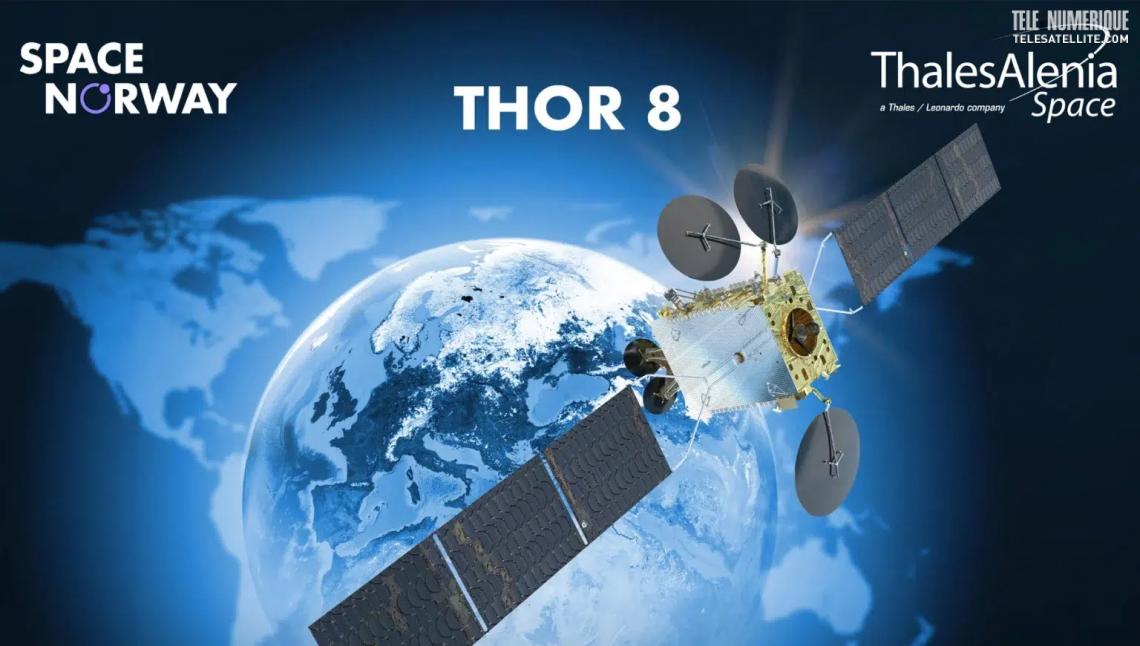
Thor 8: Ordered in 2025 from Thales Alenia Space, Thor 8 is a dual-use satellite with Ku- and Ka-band payloads, set to launch around 2028. It will serve broadcasting in Central and Eastern Europe, the Nordics, and maritime/government clients across EMEA, with a lifespan exceeding 15 years.
Frequency for Thor Satellites
|
Satellite |
Frequency |
Polarization |
Symbol Rate |
FEC |
Coverage |
Details |
|---|---|---|---|---|---|---|
|
Thor 5 |
11216 MHz |
Vertical (V) |
25000 kS/s |
3/4 |
Nordics, Europe, Middle East |
DVB-S2, 8PSK, Canal Digital Beam T1, HDTV/SD, scrambled/free-to-air. |
|
Thor 5 |
11229 MHz |
Horizontal (H) |
25000 kS/s |
3/4 |
Nordics, Europe, Middle East |
DVB-S2, 8PSK, Canal Digital Beam T1, HDTV/SD, scrambled/free-to-air. |
|
Thor 6 |
10778 MHz |
Vertical (V) |
25000 kS/s |
3/4 |
Nordics, Central/Eastern Europe |
DVB-S2, 8PSK, HDTV/SD, scrambled/free-to-air, K1/K2 beams. |
|
Thor 7 |
12494.5 MHz |
LHCP |
Variable |
Auto |
Maritime (North/Red/Baltic Sea) |
Ka-band, DVB-S2, VSAT services, beacon signal. |
|
Thor 10-02 |
11278 MHz |
Vertical (V) |
27500 kS/s |
3/4 |
Europe, Middle East |
DVB-S2, HDTV/SD, scrambled/free-to-air, Intelsat beam. |
Key Information
-
Satellite Coverage: Thor 5, 6, 7, and 10-02 primarily cover the Nordics, Central and Eastern Europe, and parts of the Middle East. Thor 7’s Ka-band extends to maritime regions, including the North Sea, Red Sea, Baltic Sea, Persian Gulf, and Mediterranean. Hot Bird (13.0° E) is more relevant for Emirates TV, but Thor’s extensive coverage supports similar channels.
-
Frequency Accuracy: The listed frequencies are for general broadcasting and data services. Emirates TV is not currently broadcast on Thor satellites, but viewers can use these transponders for other channels like BBC or Disney. Avoid outdated frequencies like 11389 MHz (Horizontal, FEC 7/8) on Thor 5.
-
Global Access: Thor signals may weaken outside Europe/MENA. For Emirates TV, consider Nilesat (12226 MHz Vertical), Arabsat (11804 MHz Horizontal), or Hot Bird (11747 MHz Vertical), or stream on official platforms.
-
Free-to-Air Status: Many Thor channels are scrambled (e.g., Canal Digital), but some are free-to-air. Emirates TV, if hypothetically added, would likely be free-to-air, like its Nilesat broadcasts.
Tips for Strong Reception
To receive Thor satellite signals (1° West or 0.8° West) with clear, uninterrupted viewing, follow these practical tips for optimal reception:
-
Dish Size: Use a 70-100 cm dish in the Nordics and Central Europe. For the Middle East or fringe areas (e.g., southern Europe), a 100-150 cm dish improves signal strength.
-
Precise Dish Alignment: Point your dish to 1° West or 0.8° West using a satellite finder or mobile apps. Ensure no obstructions (e.g., buildings, trees) block the line of sight.
-
LNB Selection: Install a Universal Ku-band LNB (9.75/10.6 GHz) for Ku-band transponders (Thor 5, 6, 10-02) or a Ka-band LNB for Thor 7’s maritime services. Confirm receiver compatibility with DVB-S and DVB-S2.
-
Signal Quality: Aim for 70% or higher signal quality (98% optimal) on your receiver’s signal meter to avoid pixelation. Adjust LNB skew for peak performance.
-
Weather Protection: Ku- and Ka-band signals may weaken during heavy rain or snow. Secure your dish and check LNB caps for water damage to ensure stability.
-
Coverage Check: Confirm your location is within the satellite’s beam (Nordics, Europe, MENA, or maritime zones) for reliable reception.
Tuning Thor Satellites on Your Receiver
Adding channels from Thor 5, 6, 7, or 10-02 to your satellite receiver is straightforward with these steps, compatible with most receivers (e.g., Strong, Humax, Starsat), though menu labels may vary.
-
Access the Menu:
-
Press “Menu” or “Settings” on your remote.
-
Navigate to “Installation,” “Channel Search,” or “Antenna Setup.”
-
-
Select Manual Scan:
-
Choose “Manual Scan,” “Manual Installation,” or “Add Transponder.”
-
Select “Add TP” or “Edit Transponder” if prompted.
-
-
Choose Your Satellite:
-
Select Thor 5, Thor 6, Thor 7, or Intelsat 10-02 (Thor 10-02) at 1° West or 0.8° West from the satellite list.
-
If not listed, manually enter the orbital position (1° W or 0.8° W).
-
-
Enter Transponder Settings:
-
Refer to the frequency table above and input the settings for your chosen satellite (e.g., 11216 MHz, Vertical, 25000 kS/s, 3/4 for Thor 5).
-
Double-check entries for accuracy.
-
-
Run the Scan:
-
Press “Scan,” “Search,” or “OK” to start the scan.
-
Select “FTA Only” for free-to-air channels or “All Channels” for scrambled and free options.
-
Wait 1-3 minutes for the scan to complete.
-
-
Save Channels:
-
Press “Save” or “OK” to store the scanned channels.
-
Channels will appear in your list (e.g., “6`eren HD” on Thor 6).
-
-
Fine-Tune for Strong Signal:
-
If the signal is weak or channels are missing, adjust the dish’s azimuth and elevation while monitoring the signal meter.
-
Check LNB skew and cables for 70-98% signal strength.
-
-
Test the Broadcast:
-
Locate a channel in your list and select it to confirm clear playback.
-
If issues persist, recheck settings or consult a professional installer.
-
Every adjustment you make — whether refining dish alignment or entering a newly released frequency — brings you closer to achieving a stable, clear, and consistent signal. Small steps often create the biggest improvements in overall reception quality.
As the broadcasting environment continues to develop, embracing these updates becomes a simple way to stay ahead of disruptions. With a bit of attention and regular checking, you can enjoy uninterrupted access to the channels you rely on every day.
Every viewer benefits from knowing how their receiver reacts to new values and how small adjustments can revitalize signal clarity. When the technical details fall into place, even complex changes feel manageable and straightforward.
Behind every stable channel lies a combination of correct configurations and careful observation. When users develop a stronger awareness of these elements, they gain greater control over their viewing experience and respond more confidently to sudden disruptions.
Signal strength is not just a number on a screen — it reflects the overall harmony between equipment, alignment, and broadcast stability. Keeping each element in balance ensures that the system remains resilient during daily use.
As technology evolves, transmitting networks adopt new techniques to deliver sharper visuals and improved sound. These advancements gradually shape the expectations of modern viewers, encouraging them to stay engaged with the latest developments.
The process of fine-tuning frequencies can seem technical, yet it becomes intuitive once users understand the logic behind each parameter. Every successful adjustment strengthens their ability to manage future updates with ease.
With time, viewers who follow frequency changes become more independent, solving issues without relying on guesswork. This confidence transforms satellite viewing from a routine task into a seamless, predictable experience.
No matter how often changes occur, maintaining a proactive mindset ensures that your system remains ready for whatever updates arrive next. The more informed you stay, the smoother your viewing journey will be.